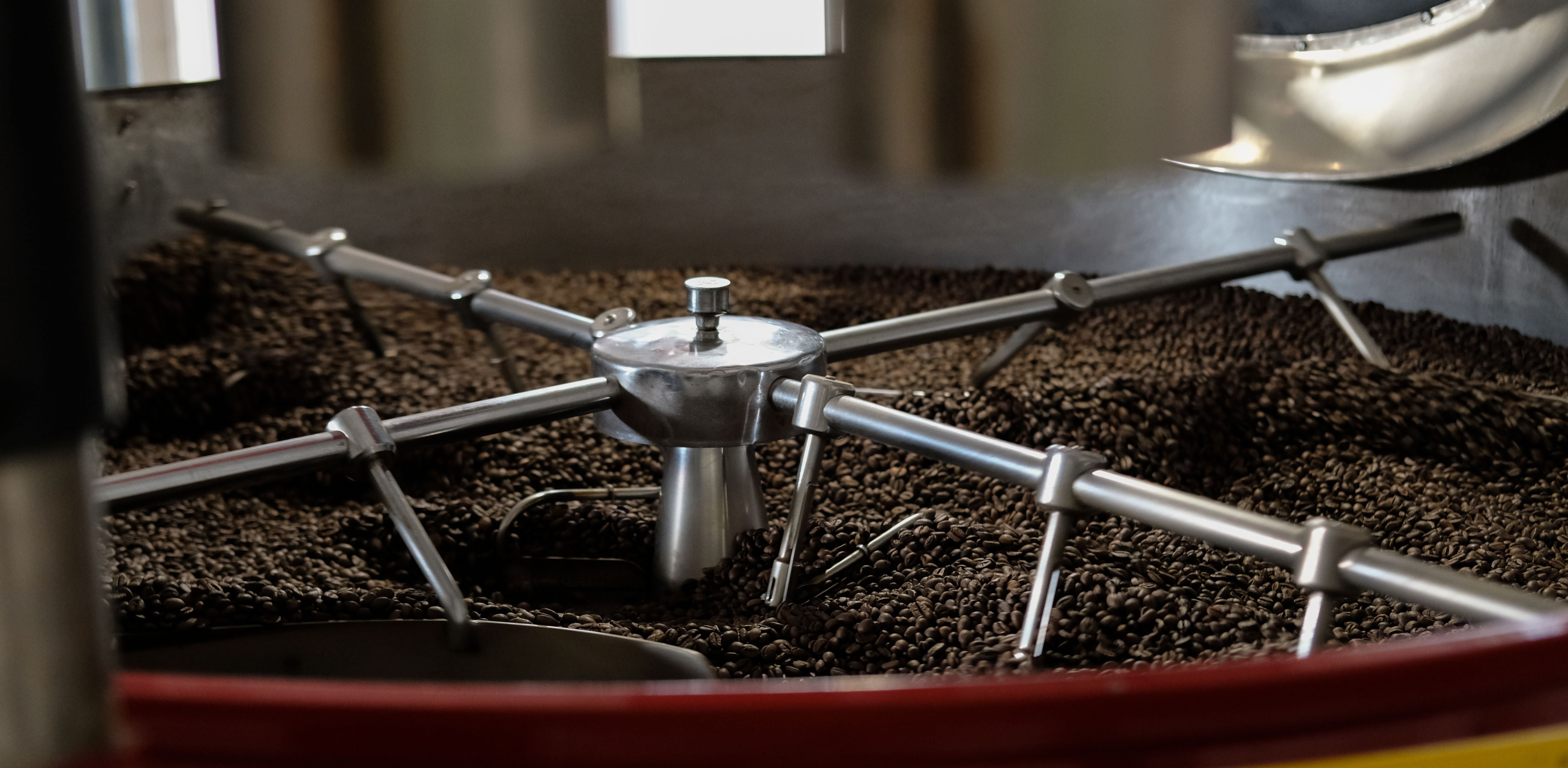

The secret to an excellent Italian espresso? The combination of different types of coffee. That's why it's called a "blend." Blends are the inviolate secret of every artisanal coffee roaster. No one will tell you the exact recipe. But it's good to know that achieving the perfect balance requires experience, professionalism, and constant attention to customer tastes.
THE ORIGINS OF COFFEE
Coffee is good precisely because the blending of different origins gives the final product a distinctive flavor and texture. Single-origin coffee has been a trend in recent years, but it's not very widespread. In fact, it's rare to taste coffee from Mexico, Brazil, or India at a coffee shop. We always drink blends that combine all these coffees, often Arabica and Robusta together.
COFFEE BALANCE
As for a melody It's necessary to use different notes, so to obtain a balanced and harmonious blend, it's necessary to use multiple coffee origins. Each brings its own aromas, its own dose of bitterness and sweetness, its own body. In this way, the characteristics of the individual qualities blend, balance, and optimize each other. Each coffee origin is distinguished by its organoleptic characteristics, but rarely are origins complete in all qualitative aspects. Blending is therefore the process of blending different coffee varieties, aimed at creating different flavors and intensities.
IN SEARCH OF 'PERFECTION'
A perfect espresso must possess all the characteristics that distinguish it from other preparations: a rich aroma, a lovely crema, a full body, a harmonious flavor, and a long, pleasant finish on the palate. The factors that contribute to the final quality of an espresso are numerous and diverse.
To achieve this goal, it is important to have a thorough understanding of the raw materials you will be using.
For example, not all varieties behave the same way during roasting, grinding, and extraction. Undoubtedly, a good quality of carefully selected raw coffee is crucial, but simply purchasing a good raw material isn't enough if the composition, blending, roasting, and, last but not least, preparation aren't done correctly.
In the complex art of blending, where quality control and in-cup defect detection are essential, the best sensory instrument currently available is employed: humans. Compared to modern technology, the human biological system, supported by the senses, is unsurpassed if genetically predisposed and sufficiently trained.

ARABICA OR ROBUSTA BLEND? THE DIFFERENCES
There are hundreds of varieties of the coffee plant in nature, but only two are widespread worldwide: Arabica and Robusta.
Arabica has its main production areas in South and Central America and in East Africa and represents 70/75% of world production.
Robusta is the other widely used coffee variety. This type of coffee is grown primarily in West Africa and the Far East and is planted at lower altitudes than Arabica.
It is a quality of coffee that, compared to Arabica, offers fewer aromas and flavors, but more body.
Based on the organoleptic macro-characteristics Of the main coffee species, Robusta coffees give blends character and a strong, decisive flavour, unlike Arabica coffees which produce sweeter, more fragrant blends with a fine flavour and aroma.
ITALIAN “PALATES”
Different regions have different flavors. In Central and Southern Italy, a stronger flavor is sought, and therefore the blend must have more robust characteristics. In the North, however, a lighter coffee is preferred, and so the tendency is to use more Arabica varieties.
ARTISAN COFFEE ROASTING: THE CUSTOMER IS ALWAYS RIGHT
"The best judge of any new blend that leaves the lab is ultimately the customer," explains Angela of Caffè Negro. "We think of a new blend, prepare it, and taste it, but then it's our customers, with their opinions, who decide whether it's worth putting into production."
How is a new blend created? First of all, we start with certified and registered plantations, from which we source select, whole coffee beans, always eliminating waste. We're also very attentive to new developments, but we carefully evaluate them. The latest blend to arrive at Caffè Negro is 'dolce crema', a creamy flavor as the name suggests, and not too strong, which has immediately been a great success.
Another new addition that caters to all tastes is our organic coffee. In recent years, consumers have increasingly sought natural products. Our organic coffee is made from strictly certified organic ingredients. The resulting blend is balanced and gives each cup of coffee a harmonious flavor.