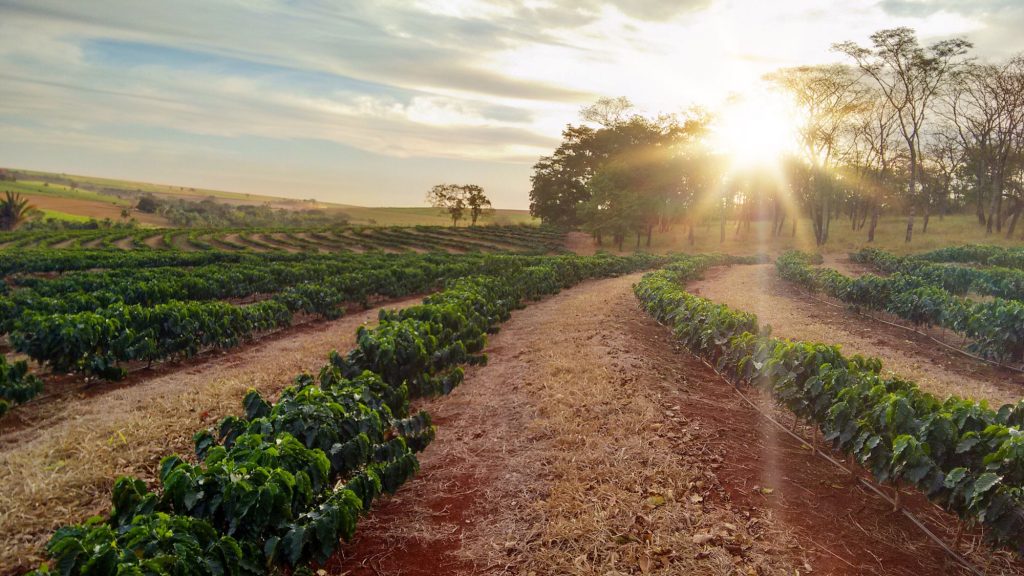
WHERE DO OUR COFFEE COME FROM?
We want to offer you a coffee that's an experience, an unforgettable coffee. With passion and expertise, we follow the entire journey of our coffee beans step by step. From birth, to maturation, to harvest, to let you savor a unique flavor.
This is why we choose the best coffees from Costa Rica, Guatemala, Brazil, Nicaragua, El Salvador, and of course, Ethiopia, where coffee originated, for our blends.
El Salvador
Immediately south of Guatemala, the small state of El Salvador produces washed natural Arabica and Maragogype coffee, mainly for the foreign market – two-thirds of production is in fact for export.
Coffee produced at high altitudes has a light, sweet flavor and moderate acidity; coffee from lower altitudes is fuller-bodied and known as Central Standard.
Costa Rica
Today's Costa Rica owes much to the coffee trade, which here is called grano de oro.
The first sacks were exported to Panama, Chile, and England in the 1820s and 1830s; since then, Costa Rica's coffee, known for its excellent quality, has always been a source of pride and an important resource for the country. The region is an ideal environment for coffee: the soil is volcanic, rich in nitrogen and phosphates, and the climate is perfect at the high altitudes, between 1,400 and 1,700 meters, where coffee is grown.
Arabica is mainly grown in varieties with a full, sweet body and a marked acidity.
Guatemala
Coffee cultivation in Guatemala dates back to 1773 and was introduced by the Jesuit fathers.
Production is among the best in the world, especially at higher altitudes: the cold air blowing over the Cuchumatanes mountains allows coffee to be grown at altitudes up to 1,900 meters. The varieties grown are primarily washed Arabica and Robusta. The Arabicas produced have a spicy aroma and a chocolatey flavor.
Brazil
Brazil is the world's leading producer of unwashed Arabica coffee and satisfies much of the world's demand.
Grown at various altitudes, from 200 to 1,000 meters above sea level, Brazilian Arabica is exported in numerous qualities.
Ethiopia
In Ethiopia, and more specifically in the Kaffa region, coffee plants grow wild: Ethiopia is the only country in the world where the plants grow wild. Typical varieties of the area are Harrar and Ghimbi.
Nicaragua
Coffee cultivation in Nicaragua is relatively new compared to other parts of the Americas, but it is still of excellent quality. Crops are grown at all altitudes, from 500 to 2,000 meters above sea level. It's noteworthy that Nicaragua grows the world's largest Maragogype beans—the largest Arabica variety, known for this reason as the "elephant bean."
ROASTING ACCORDING TO US
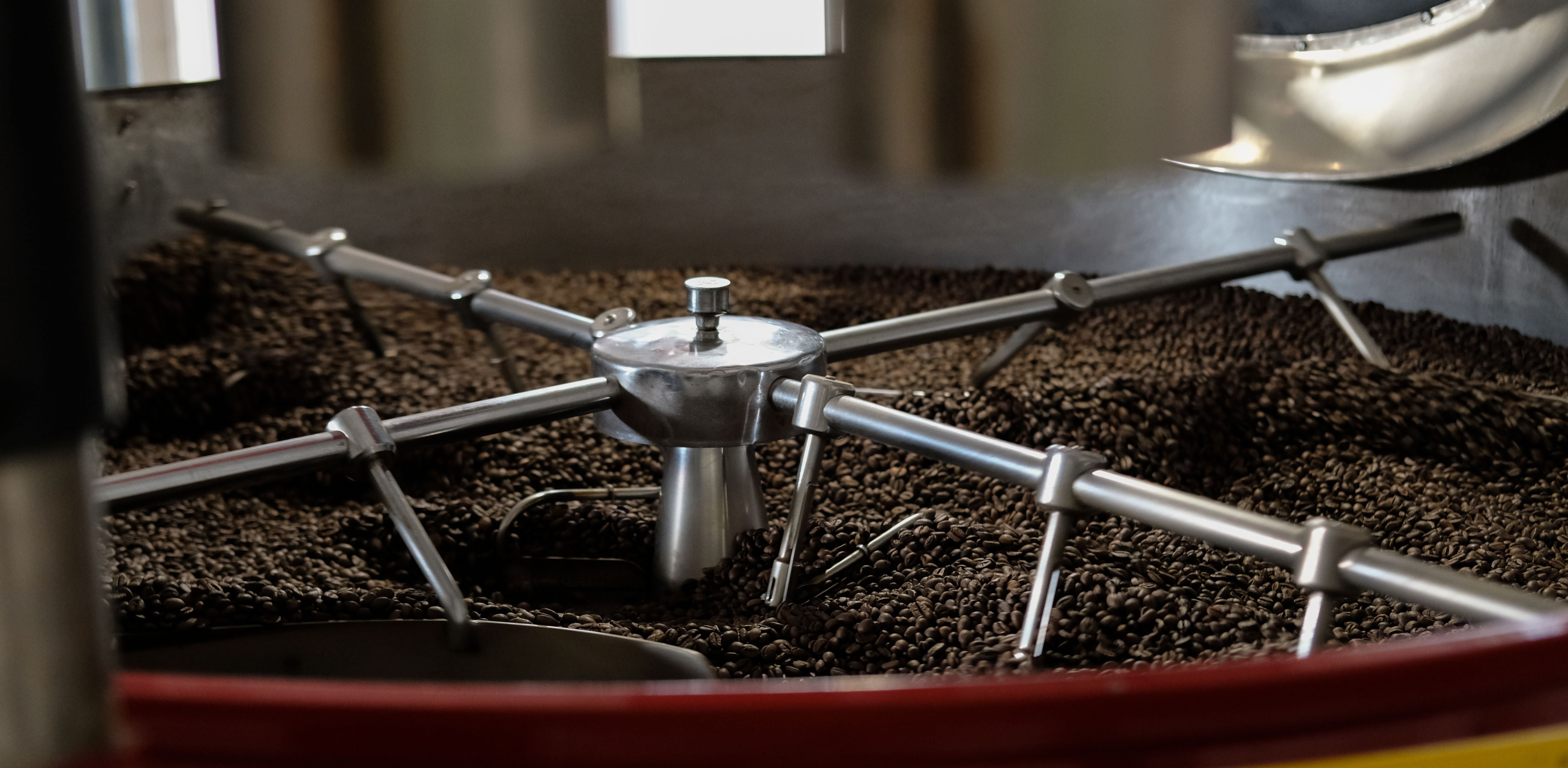
Coffee roasting is also called toasting and is the central phase of coffee production.
Expert roasting is essential to a quality product. The coffee bean, while still green, is roasted with hot air to make it light and crisp, giving it the distinctive flavor and aroma that created the beverage that both East and West have fallen in love with.
We roast our beans individually, applying traditional teachings and using state-of-the-art machinery . In each of our coffees, you'll sense passion and expertise, and so much love for what we do.
The raw materials are carefully selected: artisanal experience always guides the steps in the creation of coffee.